About AgriBiogas
AgriBiogas converts agricultural residues into renewable biomethane - delivering clean energy, lower emissions, and sustainable growth for Australian farms.

We convert ‘grass to gas’
AgriBioGas is an Australian developer and operator of anaerobic digestion plants that convert agricultural residues, manure, and organic by products into renewable biomethane and nutrient rich bio-fertiliser. Drawing on decades of experience from Ireland and the UK, the company partners with farmers to turn grass, crops, and slurry into clean energy while creating new on farm income streams, cutting emissions, and improving soil health. AgriBioGas also serves as the Australian reseller of rhobot.ai, an edge native AI platform that optimises plant performance in real time, supporting regional jobs and Australia's transition to green gas.
What We Do
-
Farm to Fuel - Turnkey AD Solutions
A turnkey AD and green gas platform from design and construction to commissioning.
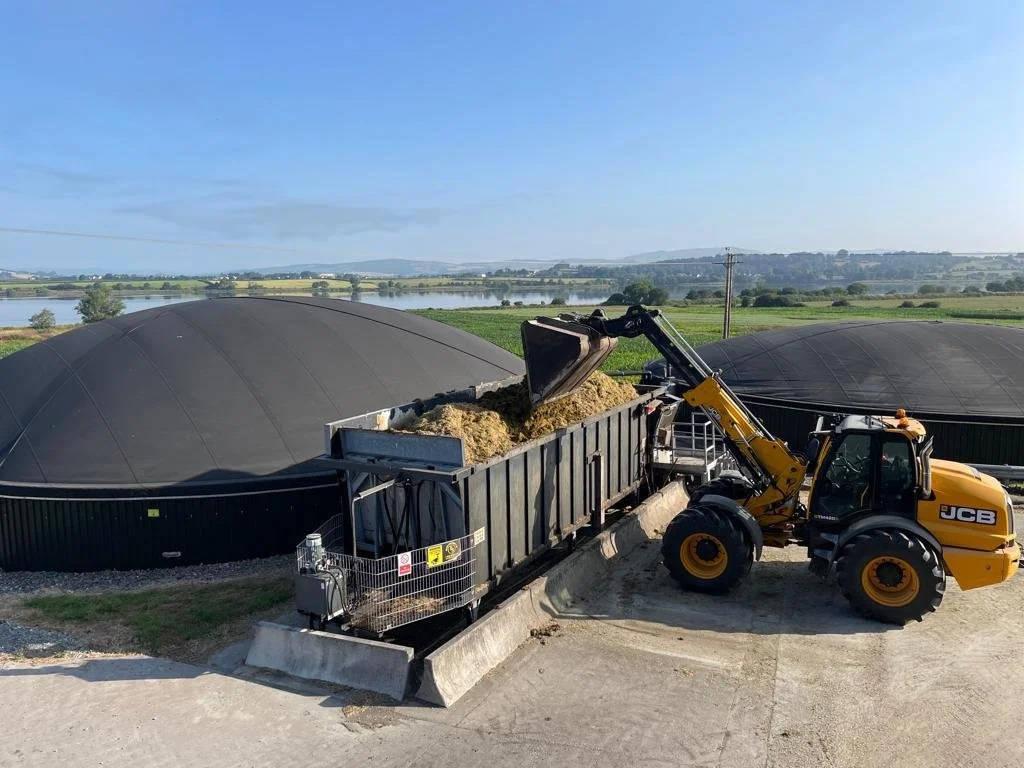
We build, drive and fuel. Turning purpose-grown grass
into renewable energy. -
Smart Solutions for Sustainable AD Operation
We implement farm-level carbon and feedstock innovations that enable both farm and commercial-scale AD plants to meet EU Renewable Energy Directive III (RED III) standards while reducing feedstock and digestate management costs.
-
Carbon Capture & Biodiversity
Through our regenerative farming methods, carbon is captured and removed from the atmosphere, helping to mitigate the effects of global warming. We also enhance biodiversity around our facilities by creating space-for-nature areas, managing habitats, establishing wildlife corridors, and planting native trees.
-
Rhobot.ai
Exclusive Australian partner of Rhobot.ai’s edge-native industrial AI, delivering real-time optimisation and autonomous control across advanced automation environments.
About AgriBiogas
AgriBiogas, established in 2025, is an anaerobic digestion (AD) development company focused on sustainable biomethane production across Australia. Backed by a team with over 20 years of experience delivering AD projects in the UK and Ireland, we bring proven expertise in renewable energy and agricultural innovation.
‘Grass to gas’
AgriBiogas transforms agricultural feedstocks into renewable energy through advanced anaerobic digestion technology. Our innovative “grass-to-gas” process produces high-quality biomethane that meets the strict sustainability criteria of the European Commission’s Renewable Energy Directive III (RED III) certification.
Sustainable Feedstock Solutions
We partner with feedstock suppliers to measure and manage soil nutrients, ensuring healthy crop growth and optimal land performance. This process produces high-grade biomethane and nutrient-rich biofertiliser, while enhancing biodiversity. Farming families benefit from a sustainable income stream and the opportunity to realise value from carbon stored on their land.
Leadership team
Our leadership team brings together over 20 years of experience in developing and operating farm and commercial-scale anaerobic digestion (AD) plants across Ireland and the UK.
Significant experience
We bring together extensive expertise in project design, construction, and management to ensure each facility reaches its full potential. Combined with our deep agricultural knowledge and supported by qualified engineers, planners, and Agri-scientists all with farming backgrounds we deliver technically excellent, sustainable biomethane solutions across Australia.
Over 20 Years’ Combined Experience in Biogas Design, Construction, and Operation
AgriBioGas
Meet the team
The AgriBiogas team is made up of seasoned professionals with extensive experience in the renewable gas and agriculture sectors. Our specialists have successfully designed, developed, and managed biogas and biomethane projects across Ireland, the UK, and Europe, bringing proven expertise to the advancement of Australia’s renewable energy industry.
-

PATRICK HARTE
CEO
Patrick has 15 years’ experience in the European renewable gas sector. He developed an engineering business that specialises in the design, construction, commissioning, and operation of anaerobic digestion facilities and biomass gasification plants throughout Europe. He is currently involved in the operation of five biogas facilities in Northern Ireland
-

MATTHEW LANG
Feedstock & Biomethane Lead
Project Manager with extensive experience in agricultural biogas facilities across the UK and Ireland. He has worked across all stages of the industry — from design and development through to operations and maintenance — giving me an in-depth understanding of what drives successful plant performance. I have a strong interest in feedstock production, nutrient management, and data analysis on farms, and work closely with operators to optimise site efficiency and output.
-
GET IN TOUCH
We’re here to help
Our team of experts are here to answer all your queries. Why not get in touch with us today to discuss your project.
Frequently Asked Questions
-
AD is the conversion of organic materials by micro-organisms in the absence of oxygen into biogas and digestate. It is a natural process that takes place in a series of sealed and airtight tanks ensuring there are no odours associated with the plant. The biogas is then cleaned and upgraded to biomethane which can be used as a renewable replacement for fossil fuels, such as natural gas, in homes, industry and transport. This entire process is natural, with all inputs and outputs recycled, leaving no waste. The first anaerobic digestion plant was built in 1859 and the technology has advanced steadily since then. Today the technology enables countries such as Denmark to replace 34% of their natural gas consumption with biomethane, with an ambition to replace 100% by 2030.
-
Biogas is a mixture of methane, CO2 and small quantities of other gases produced by anaerobic digestion of organic matter in an oxygen-free environment. The precise composition of biogas depends on the type of feedstock and the production pathway. The methane content of biogas typically ranges from 49% to 56% by volume, with most of the remainder being CO2.
-
Biomethane (also known as “renewable natural gas”) is a near-pure source of methane produced by “upgrading” biogas in a process that removes any CO2 and other contaminants present in the biogas. Biomethane is indistinguishable from natural gas and can be used without the need for any changes in transmission and distribution infrastructure or end-user equipment and is fully compatible for use in natural gas vehicles.
-
Biomethane will play a vital role in reducing emissions across key sectors of the Australian economy — including heating, industry, transport, and power generation — while supporting the decarbonisation of agriculture and food production. As a renewable gas chemically identical to natural gas, it can flow through existing infrastructure, allowing homes and businesses to transition to sustainable energy without major change.
-
Most people primarily know carbon dioxide as a greenhouse gas that contributes to climate change. It is true that CO2 harms our environment when it is released into the air, but carbon dioxide also has many different applications across a wide range of industries. At AgriBiogas, we capture this CO2 from the air and use it. Carbon dioxide is used in the Food and Beverage industries for carbonating drinks like beer, soft drinks and wine. Carbon dioxide can carry energy as a refrigerant. Solid CO2, better known as dry ice, keeps food products cold while they are being transported.
-
Our facilities utilise locally produced agricultural derived feedstocks such as multi-species grass silage, wholecrop arable crops as well as farmyard manure and animal slurry from local farms. The feedstocks used to produce the biomethane are carefully managed by the experienced team at AgriBiogas. We have created the Bio-nutrient Cycle, which utilises a pioneering range of practices and technologies to develop renewable biomethane and organic fertiliser to enhance rural economies. AgriBiogas engage with farmers and guide them through the process, enabling them to generate sustainable feedstock for the facility while simultaneously reducing their need for expensive chemical fertilisers.
-
The renewable biomethane and CO₂ we produce comply with the RED II and RED III sustainability standards — global benchmarks for renewable biofuels. While developed for the EU, these frameworks align closely with Australia’s transition toward certified low-carbon energy. By applying these principles, Agribiogas ensures international best practice in emissions reduction, traceability, and sustainable biomethane production.
-
At AgriBiogas, we pride ourselves on operating our facilities using best practice to eliminate any issues in terms of odour or noise. Following this best practice, we currently operate 22 AD facilities without complaints or issues. The biology inside our digesters only works when there is an absence of oxygen. Our whole process must be done in sealed air-tight digestion tanks because of this. The solid feedstocks we use are stored in buildings. Liquid feedstocks are stored in covered tanks and our biofertiliser is applied using the latest low emission technology available.
Noisy equipment is housed in sound-proofed buildings to reduce noise pollution around the site. This is important for the health and safety of our staff as well as local residents and businesses.
-
Ingests and learns from real-world process data to continuously optimize performance
Deploys on-site, with agents that update control setpoints in real time
Improves sustainability, traceability, and biogas quality
Goes beyond digital twins—acts like a digital organism at the industrial edge
Get in touch
We’re here to answer all your queries